
Internal Control Analysis and Reporting
Forensic internal control analysis evaluates whether an organization’s financial and operational controls are designed and operating effectively to prevent, deter, or detect fraud and error as part of an investigation of suspected wrongdoing. This service is used by boards, owners, and management following a suspected control failure.
When Clients Engage This Service
A fraud incident happened or may have happened, and you want to know why your control structure didn’t catch it sooner. This analysis is conducted in response to specific concerns of wrongdoing where the expert performs procedures to collect, analyze, evaluate, or interpret evidence to assist stakeholders in reaching conclusions about the allegations. Often, this engagement occurs in parallel or simultaneous to the fraud investigation itself. Boards, owners, and management turn to this service for a clear-eyed assessment rather than a checklist exercise.

Engagement Approach
Control evaluations are performed using the Committee of Sponsoring Organizations of the Treadway Commission (COSO) Internal Control Integrated Framework (2013), the framework referenced by the SEC and PCAOB for evaluating internal control over financial reporting. The COSO framework organizes controls into five components: control environment, risk assessment, control activities, information and communication, and monitoring activities, each assessed against the organization’s size, industry, and risk profile so the recommendations reflect the client’s actual operating environment rather than a generic checklist. Fraud risk indicators and control gaps are assessed using the COSO and ACFE joint guidance on fraud risk management, which extends the COSO framework specifically to fraud risk identification, assessment, and mitigation. Particular attention is given to segregation of duties among authorization, custody, and recordkeeping functions, and to controls over cash disbursements, payroll, and vendor and customer master file changes, the control gaps most frequently associated with occupational fraud in ACFE’s biennial Report to the Nations.
Engagement Deliverables
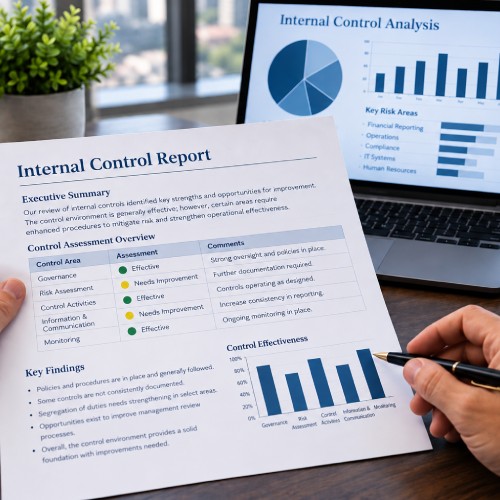
A written report identifying control deficiencies, categorizing each by risk level, and providing specific, actionable remediation recommendations, written for a business or legal audience that does not require an accounting background to follow. Each engagement will be scoped to the client’s specific risk concerns and reporting needs before work begins.