
Bankruptcy and Insolvency Analysis
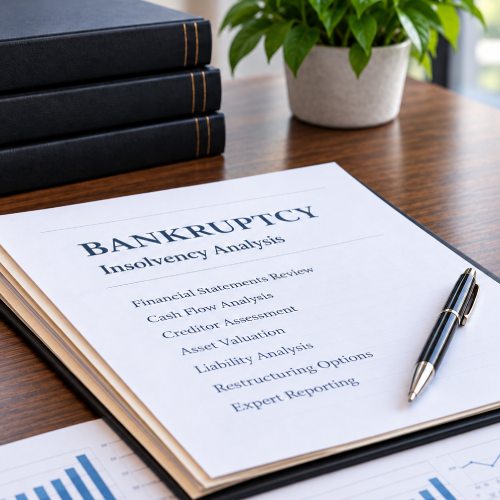
Bankruptcy and insolvency engagements support trustees, creditors’ committees, debtors, and their counsel in Chapter 7, 11, and 13 proceedings and in related state-court insolvency and receivership matters. Common questions include whether a debtor was solvent at a given point in time, whether a transfer can be avoided as preferential or fraudulent, and what assets are available for distribution to creditors.
When Attorneys Engage This Service
As a trustee, you need to know whether pursuing an avoidance action is worth the litigation cost before committing estate resources to it. As a creditors’ committee, you need an honest read on recovery prospects before voting on a plan. As a debtor or debtor’s counsel, you need to defend against an avoidance claim or demonstrate that the company was solvent at a disputed transaction date. Each of these decisions depends on financial analysis that will hold up if the matter is contested.

Engagement Approach
Solvency determinations apply the balance sheet test, the cash flow test (ability to pay debts as they mature), and the capital adequacy test, using contemporaneous financial records and, where appropriate, business valuation methodology under AICPA VS Section 100. Where fraud, asset concealment, or books-and-records irregularities are suspected, procedures follow ACFE fraud examination methodology and the AICPA Statement on Standards for Forensic Services No. 1.
Engagement Deliverables
Justin has experience reconstructing financial records where books are incomplete or unreliable, drawn in part from methods used in federal financial investigations, and will deliver a written report addressing solvency, transfer-avoidance exposure, or asset-recovery potential for use in a bankruptcy court proceeding or negotiated resolution among creditors. Justin will engage with the client’s legal counsel, as applicable, prior to the engagement to discuss the use cases for the analysis, including the need to keep workpapers and reports privileged under the Kovel doctrine.