
Intellectual Property Damages
Patent, trademark, copyright, and trade secret disputes require quantification of the economic harm caused by infringement or misappropriation. This service supports IP litigation counsel with damages analysis built on the specific legal framework that applies to the type of intellectual property at issue.
When Clients Engage This Service
Someone has infringed on your or your client’s patent, copied your trademark or copyrighted work, or misappropriated a trade secret you spent years developing, and you need the economic harm quantified in a way that survives scrutiny. Or you’re on the other side of that claim and need an independent check on whether the damages theory being asserted actually fits the facts and the law. IP litigation counsel turns to this service because the measure of damages differs materially depending on the type of intellectual property at issue, and getting that framework wrong early can undermine the entire case.
Engagement Approach
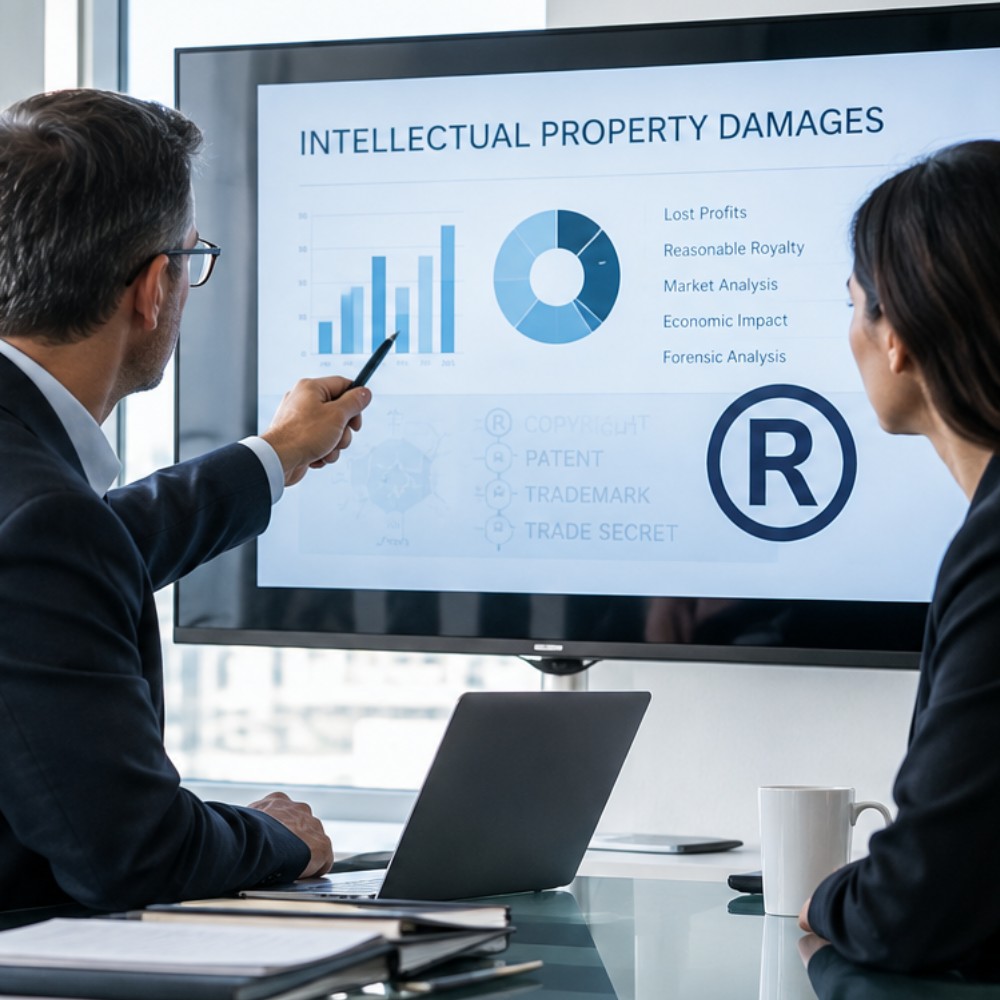
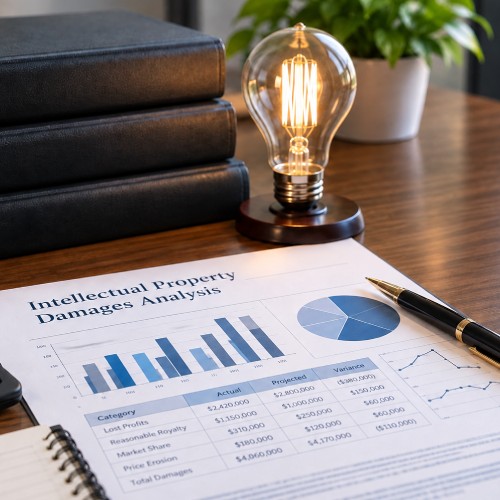
Justin’s analysis focuses on the practical financial questions at the center of an intellectual property dispute: what sales, profits, royalties, or business value were lost because of the alleged infringement or misuse. For patent matters, damages may be based on profits the owner would have earned but for the infringement, or on a royalty that fairly reflects the value of using the patented technology. Trademark and copyright matters may involve lost sales, harm to brand or market value, profits earned by the other party, or other measurable economic losses. Trade secret matters may be evaluated based on the owner’s losses, the benefit gained by the party that used the information, or a fair royalty when the loss or gain cannot be measured directly. In each case, the analysis ties the damages theory to the facts, available financial records, and the way the intellectual property created value in the marketplace.
Engagement Deliverables
IP damages calculations typically rely on a separate infringement or validity opinion from a technical or patent expert. Justin works from that expert’s conclusions on the scope of infringement to build the financial model, keeping the technical and financial opinions properly separated in the record, and matches the damages theory to the specific cause of action and jurisdiction.